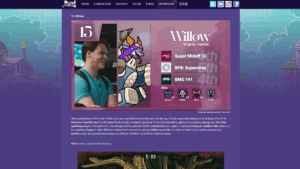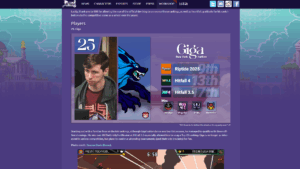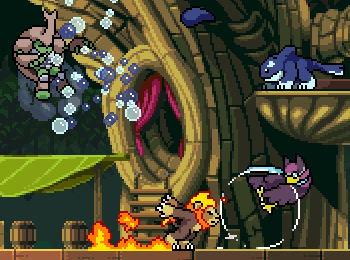

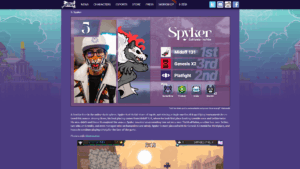
Rivals 1 Community Rankings 2025: #5 – 1
03/04/20260

In the not-so-distant future, technology had advanced to the point where humans and artificial intelligence (AI) coexisted in a world that was on the brink of a revolutionary change. Among the frontrunners of this revolution was a project known as "Unity with Smart" (UWS), a cutting-edge initiative aimed at merging human intelligence with AI to achieve unprecedented levels of understanding, innovation, and peace.
Fourth, every element was relevant to the core mission of liberating Western Europe. This relevance forged unity by pruning distractions. For instance, the French Resistance’s sabotage of railway lines (Plan Vert) was directly relevant to isolating the battlefield. Conversely, Allied leaders rejected proposals to bomb French cultural sites for secondary tactical advantage, preserving political unity with the Free French. In modern terms, relevance prevents “scope creep” within a coalition. When each partner sees that their sacrifice directly serves the shared goal—as the Canadian forces at Juno Beach understood their role in protecting the British left flank—unity becomes self-reinforcing rather than coerced.
Performance Bottlenecks on Lower-End Hardware: While DOTS is efficient, the sheer number of simultaneous agents (2,000+ soldiers, 50+ landing craft, explosions) will still choke a mid-range laptop. You will need to aggressively culling distant units.
The term may also relate to digital projects developed using the Unity game engine that focus on D-Day: Unity of Command II
Not for Beginners: If you are new to C# or Unity’s Entity Component System (ECS), you will be lost. The codebase relies heavily on Jobs, Burst Compiler, and custom authoring components. Expect to spend weeks just understanding the architecture before you modify it.
In conclusion, “Unity with SMART D-Day” is not a nostalgic slogan but a transferable template for any high-stakes collaborative effort. D-Day succeeded not because the Allies were unified in a vague sense of friendship, but because they were unified within a SMART cage. Specificity denied ambiguity; measurability provided feedback; achievability prevented despair; relevance ensured commitment; and time-bound pressure produced action. Unity without these attributes is a parade; unity with them is an invasion. For any organization facing its own “fortress”—be it a product launch, a scientific breakthrough, or a humanitarian rescue—the Normandy cliffs remain a timeless lesson: align your forces, then hold them to the SMART standard of truth.
Several games and simulators related to D-Day have been developed using the Unity platform, often discussed in technical case studies or developer forums: Unity of Command II – D-Day! – Part 9
In the not-so-distant future, technology had advanced to the point where humans and artificial intelligence (AI) coexisted in a world that was on the brink of a revolutionary change. Among the frontrunners of this revolution was a project known as "Unity with Smart" (UWS), a cutting-edge initiative aimed at merging human intelligence with AI to achieve unprecedented levels of understanding, innovation, and peace.
Fourth, every element was relevant to the core mission of liberating Western Europe. This relevance forged unity by pruning distractions. For instance, the French Resistance’s sabotage of railway lines (Plan Vert) was directly relevant to isolating the battlefield. Conversely, Allied leaders rejected proposals to bomb French cultural sites for secondary tactical advantage, preserving political unity with the Free French. In modern terms, relevance prevents “scope creep” within a coalition. When each partner sees that their sacrifice directly serves the shared goal—as the Canadian forces at Juno Beach understood their role in protecting the British left flank—unity becomes self-reinforcing rather than coerced. unitywithsmart d-day
Performance Bottlenecks on Lower-End Hardware: While DOTS is efficient, the sheer number of simultaneous agents (2,000+ soldiers, 50+ landing craft, explosions) will still choke a mid-range laptop. You will need to aggressively culling distant units. Unity with Smart: D-Day In the not-so-distant future,
The term may also relate to digital projects developed using the Unity game engine that focus on D-Day: Unity of Command II This relevance forged unity by pruning distractions
Not for Beginners: If you are new to C# or Unity’s Entity Component System (ECS), you will be lost. The codebase relies heavily on Jobs, Burst Compiler, and custom authoring components. Expect to spend weeks just understanding the architecture before you modify it.
In conclusion, “Unity with SMART D-Day” is not a nostalgic slogan but a transferable template for any high-stakes collaborative effort. D-Day succeeded not because the Allies were unified in a vague sense of friendship, but because they were unified within a SMART cage. Specificity denied ambiguity; measurability provided feedback; achievability prevented despair; relevance ensured commitment; and time-bound pressure produced action. Unity without these attributes is a parade; unity with them is an invasion. For any organization facing its own “fortress”—be it a product launch, a scientific breakthrough, or a humanitarian rescue—the Normandy cliffs remain a timeless lesson: align your forces, then hold them to the SMART standard of truth.
Several games and simulators related to D-Day have been developed using the Unity platform, often discussed in technical case studies or developer forums: Unity of Command II – D-Day! – Part 9