Enhanced/Dual Powered
Willem EPROM Programmer
User Guide
Main Board / Cables
Main Board PCB3.5
Main Board PCB4E

Main Board PCB5.0

Main Board PCB5.5C

|
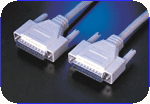
Parallel Data Cable (Printer extension cable, with male-female 25 pin connector, and pin to pin through) |
A-A type USB cable(for power) |
|
|
|
Optional Items:
|
ATMEL 89 Adapter |
ATMEL PLCC 44 Adapter |
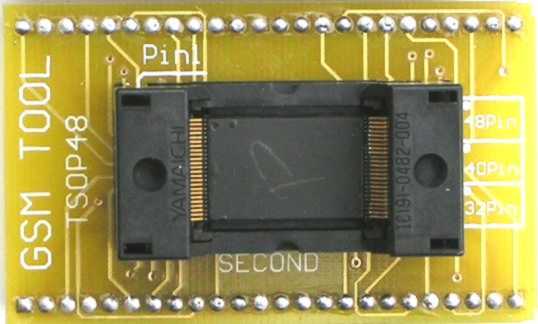
TSOP 48 Adapter |
|
|
|
|
|
FWH/HUB PLCC32Adapter |
PLCC32 Adapter |
SOIC Adapter(Simplified) |
|
On-Board |
On-Board |
|
|
AC or DC Power Adapter (9V or 12V, 200mA) |
SOIC Adapter(Professional) |
|
|
|
|
|
Entertainment content and popular media have always served as society’s mirror, reflecting our values, anxieties, and aspirations. However, the last two decades have witnessed a paradigm shift—from scheduled broadcasts to on-demand streaming, from passive viewership to active participation. Today, popular media is not just what we watch or listen to; it is a participatory ecosystem where audiences co-create meaning, trends, and even the content itself.
For decades, popular media was "appointment based." You watched a show when it aired or caught a movie during its theatrical run. Today, the "on-demand" model reigns supreme. Streaming giants like Netflix, Disney+, and HBO Max have transformed how entertainment content is produced, favoring binge-worthy serialized storytelling over episodic formats. wwwtoptenxxxcom
Here is what you need to know about the current state of play. Write-Up: Entertainment Content and Popular Media 1
Today, entertainment content is defined by convergence. Netflix produces Oscar-winning films (a former cinema monopoly). Spotify hosts video podcasts (a former audio-only space). TikTok edits are now the primary promotional tool for $200 million blockbusters. Here is what you need to know about
Artificial Intelligence (Generative AI): AI will not replace the idea of a movie, but it will replace the background artist, the voice actor for minor roles, and the subtitle translator. We will see "personalized media"—imagine an AI that edits the ending of a romantic comedy to be sad or happy based on your viewing history. Debate will rage over whether an AI-generated script belongs in popular media.
What does the next ten years hold for entertainment content and popular media? Three major trends will define the future.
Entertainment content can also influence social norms, shaping our expectations and behaviors. For example, the TV show "The Cosby Show" helped to redefine the image of the African American family, challenging traditional stereotypes and promoting a more positive representation of black families. Similarly, the movie "The Breakfast Club" explored themes of teenage angst and rebellion, influencing the way we think about adolescence and youth culture.
Hardware Installation & Configuration
|
Installation Steps
(Note: the LPT port of PC MUST set to ECP or ECP+EPP during BIOS setup. To enter the BIOS setting mode, you need press "Del" key or "F1" key during the computer selftest, which is the moment of computer just power up.)
Software Version To Use | |||
| |||
|
| |||
|
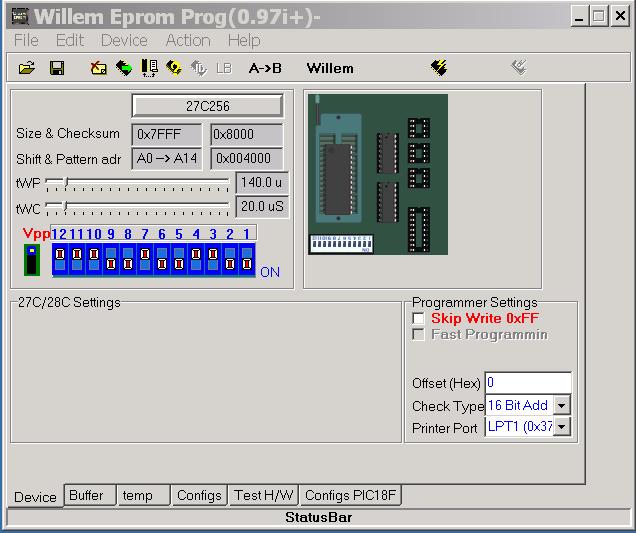
The software interface:
| |||
|
| |||
|
Hardware
Check
| |||
|
PCB3.5/PCB4E
PCB5.0
PCB5.5C
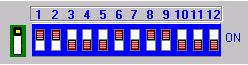
Note: the Vcc setting jumper only has effect when you are using AC adaptor as power source. For the USB power only 5V Vcc is available. For the PCB5.5C, set DIP steps: 1. press DIP Set button twice to check current DIP bit position. Then set it again for ON or OFF. 2. press DIP Bit shift button to shift the DIP bit position to where need to set. And then press DIP Set button twice to check current DIP bit position. Then set it again for ON or OFF. 3. Repeat those steps till all DIP bit ae set same as software indicated. For PCB5.5C voltage and Special chip selection: 1. Put back the safety jumper. 2. Press the voltage button and hold for 1 second, the voltage LED should move to next. Repeat till desired voltage LED light up. 3. Press the chip selection button and hold for 1 second, the chip LED should move to next. Repeat till desired LED light up. 4. Remove the safety jumper to lock the selected voltage and chip selection DIP Switch (PCB3.5, PCB5.0)
When programming one chip, follow the program prompt to set DIP switch .
|
Entertainment content and popular media have always served as society’s mirror, reflecting our values, anxieties, and aspirations. However, the last two decades have witnessed a paradigm shift—from scheduled broadcasts to on-demand streaming, from passive viewership to active participation. Today, popular media is not just what we watch or listen to; it is a participatory ecosystem where audiences co-create meaning, trends, and even the content itself.
For decades, popular media was "appointment based." You watched a show when it aired or caught a movie during its theatrical run. Today, the "on-demand" model reigns supreme. Streaming giants like Netflix, Disney+, and HBO Max have transformed how entertainment content is produced, favoring binge-worthy serialized storytelling over episodic formats.
Here is what you need to know about the current state of play.
Today, entertainment content is defined by convergence. Netflix produces Oscar-winning films (a former cinema monopoly). Spotify hosts video podcasts (a former audio-only space). TikTok edits are now the primary promotional tool for $200 million blockbusters.
Artificial Intelligence (Generative AI): AI will not replace the idea of a movie, but it will replace the background artist, the voice actor for minor roles, and the subtitle translator. We will see "personalized media"—imagine an AI that edits the ending of a romantic comedy to be sad or happy based on your viewing history. Debate will rage over whether an AI-generated script belongs in popular media.
What does the next ten years hold for entertainment content and popular media? Three major trends will define the future.
Entertainment content can also influence social norms, shaping our expectations and behaviors. For example, the TV show "The Cosby Show" helped to redefine the image of the African American family, challenging traditional stereotypes and promoting a more positive representation of black families. Similarly, the movie "The Breakfast Club" explored themes of teenage angst and rebellion, influencing the way we think about adolescence and youth culture.