Oligoscan is an innovative medical device
Physiological imbalance screening. Non-invasive, no blood test needed.
Learn moreOligoscan easy to use
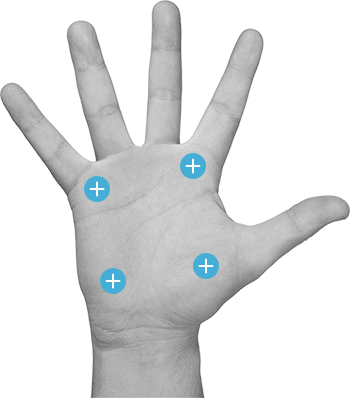
A quick evaluation of minerals and toxic metals in the palm of the hand.
Learn moreScreening of physiological imbalances helps better health control and trace minerals overall wellbeing.
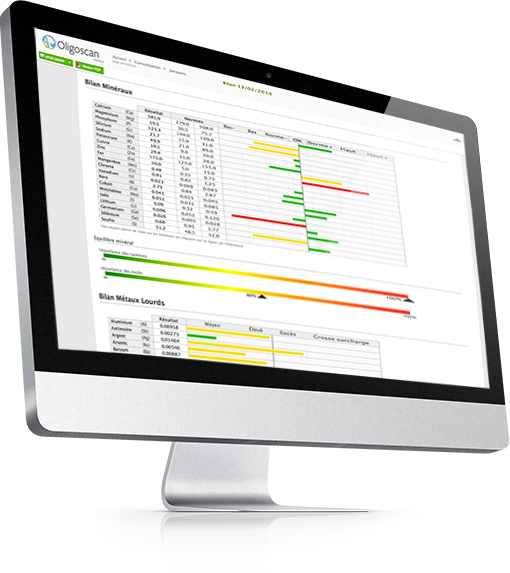
Excess and deficiency in minerals
A risk of toxic metals poisoning
Responsible for aging and numerous other diseases
Instant measurements of minerals, trace elements, oxidative stress and toxic metals.
Oligoscan can be used by all health specialists allowing for rapid and pain free analysis.
The measurement is taken directly by a portable spectrometer connected to a computer
The technology is based on spectroscopy
Evaluation of trace minerals reserves, the level of oxidative stress and toxic metals
Non-invasive measurement taken in situ
The record provided allows for detection of trace elements and minerals deficiencies as well as high rate of toxic metals in the body.
Oligoscan is now used by health professionals in many countries as a solution whenever a quick and accurate analysis of the level of trace elements, minerals and toxic metals is needed.
The Oligoscan uses optical technology : spectrophotometry.
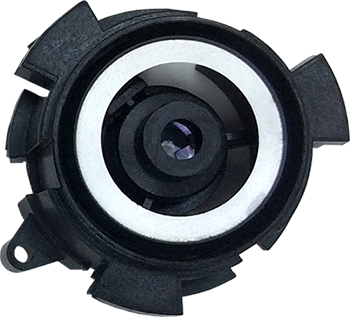
This is a quantitative analytical method of measuring the absorption or the optical density of a chemical.
It is based on the principle of absorption, transmission or reflection of light by the chemical compounds over a certain wavelength range.
Spectrophotometry is used in many areas : chemicals, pharmaceuticals, environment, food, biology, medical / clinical, industrial and others.
In the medical field, spectrophotometry is used to examine blood or tissue.
The Oligoscan is a reliable and scientifically proven tool..
A set of tests and comparative studies have been made by researchers highlighting a correlation between the results of the Oligoscan and those performed in the laboratory.
Interspecies sexual activity is widely condemned and regulated across the globe.
One of the most significant advancements in the field is the Fear Free movement. Historically, veterinary visits were high-stress events involving "manhandling" or heavy restraint to get the job done. Veterinary science now recognizes that high cortisol levels and extreme stress don't just hurt an animal's psyche—they skew clinical data.
Human-Animal Bond: Studies are exploring how human beliefs influence animal reality, including the finding that cats form secure attachments to caregivers similar to those seen in dogs and infants.
The team then conducted a thorough analysis of the wildebeests' behavior, including their social interactions, feeding patterns, and physiological responses. They discovered that the animals were experiencing a surge in stress hormones during the eclipse, which was likely contributing to their increased susceptibility to the toxic algae.
Animal behavior and veterinary science are two sides of the same coin. As we continue to peel back the layers of animal consciousness, the veterinary profession will continue to move toward a more holistic, "whole-animal" approach. By treating the mind as carefully as we treat the body, we ensure a higher quality of life for the creatures that share our world.
La investigación académica sobre la interacción sexual entre humanos y primates no humanos es un campo interdisciplinario que abarca la antropología biología evolutiva psicología
Behavior as a Health Indicator: Veterinary medicine now views behavioral changes not just as "nuisance" issues but as critical indicators of biological functioning and underlying disease, such as pain or neurological decline.
: Behavioral traits can be innate (instinctive) or learned through imprinting, conditioning, and imitation.
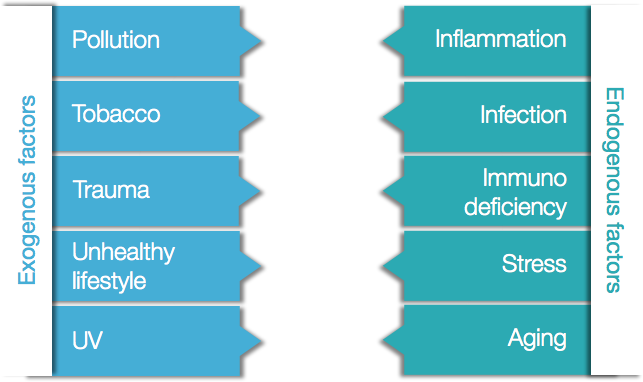
Free radicals are molecules produced in small amounts by the body. These free radicals are very reactive substances, capable of damaging the components of the cells (enzyme proteins, lipid membranes, DNA).
Their production is particularly stimulated by the exposure to sunlight (UV), tobacco, pollution, pesticides, etc.
A diet rich in antioxidants, particularly found in some fruits and vegetables, is essential in fighting free radicals.
Some scientific references :
Interspecies sexual activity is widely condemned and regulated across the globe.
One of the most significant advancements in the field is the Fear Free movement. Historically, veterinary visits were high-stress events involving "manhandling" or heavy restraint to get the job done. Veterinary science now recognizes that high cortisol levels and extreme stress don't just hurt an animal's psyche—they skew clinical data.
Human-Animal Bond: Studies are exploring how human beliefs influence animal reality, including the finding that cats form secure attachments to caregivers similar to those seen in dogs and infants.
The team then conducted a thorough analysis of the wildebeests' behavior, including their social interactions, feeding patterns, and physiological responses. They discovered that the animals were experiencing a surge in stress hormones during the eclipse, which was likely contributing to their increased susceptibility to the toxic algae.
Animal behavior and veterinary science are two sides of the same coin. As we continue to peel back the layers of animal consciousness, the veterinary profession will continue to move toward a more holistic, "whole-animal" approach. By treating the mind as carefully as we treat the body, we ensure a higher quality of life for the creatures that share our world.
La investigación académica sobre la interacción sexual entre humanos y primates no humanos es un campo interdisciplinario que abarca la antropología biología evolutiva psicología
Behavior as a Health Indicator: Veterinary medicine now views behavioral changes not just as "nuisance" issues but as critical indicators of biological functioning and underlying disease, such as pain or neurological decline.
: Behavioral traits can be innate (instinctive) or learned through imprinting, conditioning, and imitation.